“Leadership Matters” – the podcast series for good leadership
Most people have a pretty good idea of what bad leadership looks like. But what makes a good leader? Are good leaders born or is “leader material” something that we learn throughout our careers? Why bother taking another leadership training?
We discuss these and other questions with renowned experts from research and practice in our podcast series “Leadership Matters” in cooperation with Faculty@TUM, the platform for leadership development for professors at TUM. Subscribe to the series on Spotify, Apple Podcasts, or Google Podcasts so you don’t miss an episode.
Overview of the Episodes
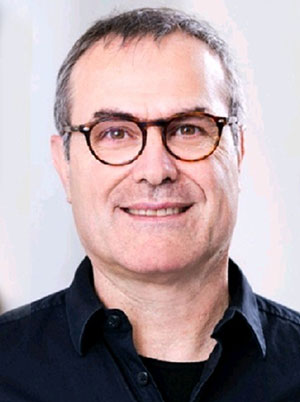
In this episode, we speak with Prof. Dr. Harald Gündel, Medical Director of the Department of Psychosomatic Medicine and Psychotherapy at the University Clinic Ulm. We learn how body and mind react to the work environment. Is resilience the key to staying healthy? Prof. Dr. Gündel offers a different perspective on resilience in the organizational context. He talks about potential limits of resilience training and explains how good leadership can contribute to both resilient teams and resilient organizations.
As a TUM employee you can find out more about the topic with the following resources:
About the expert:

“Relationships as regulators: The quality of the relationships in which we live has an impact on the functioning of our biological systems.”
Prof. Dr. Harald Gündel is an expert in occupational mental health research. He is Medical Director of the Department of Psychosomatic Medicine and Psychotherapy at the University Clinic Ulm, certified psychiatrist, neurologist, and psychotherapist with a special qualification in pain therapy and psychoanalysis. His research focuses mainly on interventions in the workplace setting and in psychotherapy.
How can leaders and teams help shape a sustainable return to work after a mental health crisis?
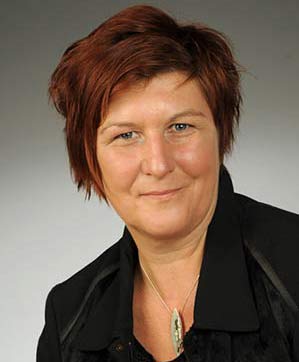
In this episode, we discuss with Ute Schröder, an expert in occupational integration management, the different phases of the reintegration process and related best practices for managers and teams.
Contrary to popular belief, this process does not start on the first day back to work, but rather while the employee is still on sick leave. The active involvement of various stakeholders over a longer time period, including direct supervisors, team members, and occupational health professionals, is therefore required. Ute Schröder also reports on her research and transfer projects with the Federal Institute for Occupational Safety and Health in Germany.
As a TUM employee you can find out more about the topic with the following resources:
About the expert:

“The success of reintegration depends not only on the returning employee, but also on the reaction of the company and the management in the team.”
Ute Beate Schröder is an expert in workplace integration management, a research associate at the Federal Institute for Occupational Safety and Health in Germany, and a freelance evaluator, social manager and researcher.
Mistakes happen, no matter how hard we try to avoid them. Worse, the same mistakes happen over and over again, making our learning curve look pretty bad. This dynamic is no different in teams, leaving leaders scratching their heads about what went wrong and what they could do differently in the future.
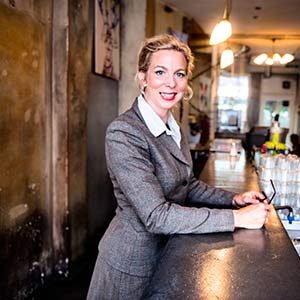
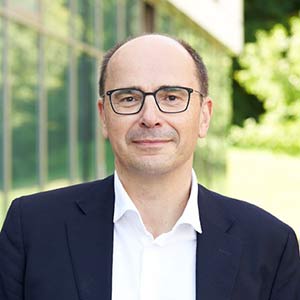
In this episode, two managers share their experiences in a fictional role play: Thomas Loosen, systemic therapist and former head of the HRO (high reliability organisation) centre at the Gösgen Nuclear Power Plant in Switzerland, meets actress Franziska Ball, who takes on the role of the other manager. They start by describing the problem and what helped them resolve it over time.
About the experts:

Dr. Thomas Loosen is a systemic consultant and therapist. He completed his further training in this field at the International Society for Systemic Therapy in Heidelberg and at the Technical University of Kaiserslautern. He previously set up and managed the HRO (high reliability organization) center at the Gösgen nuclear power plant in Switzerland. He developed new training programs to change the inner attitude towards oneself, the team and tasks/ assignments in order to reduce misconduct. In doing so, he broke new ground in the development of the safety culture. Dr. Thomas Loosen ran his own practice for systemic therapy and consulting in Switzerland.

Franziska Ball, born and raised in Munich, received her acting and singing training in Munich and New York. For years, the actress and singer has been touring Germany with her duo BALL & JABARA with self-produced music cabaret theater pieces and has already won several cabaret awards. In addition to film and television roles, she teaches at the University of Music and Performing Arts in Munich and works as a narrator for audio books, audio films and Bavarian Radio.
How does the way we approach conflicts influence our leadership behavior and teamwork?
In this episode, we talk to psychologist and mediator Dr. Janine Netzel from the Munich Center for Leadership. Together, we delve into the world of conlict management, exploring how clear communication, fairness, and a proactive attitude can help defuse conflicts early on and foster a strong team culture.
Dr. Janine Netzel explains why we should not demonize conflicts but instead see them as growth opportunities. She also shares practical tips on how leaders can improve their own conflict resolution skills while serving as role models for their team.
About the expert:
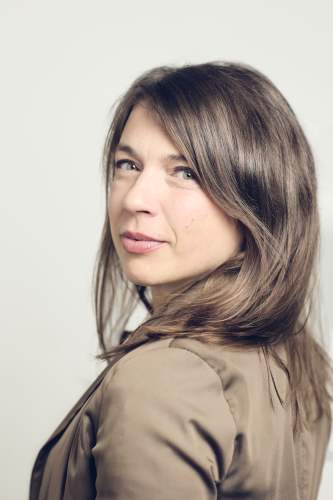
Dr. Janine Netzel has been a professor of business psychology at the International School of Management in Munich since 2019. She also works as a mediator, consultant, managing director, and co-founder at the Munich Center for Leadership GmbH. She completed her doctorate (Dr. phil.) at the Ludwig Maximilian University of Munich with a focus on power and perspective-taking as factors in hierarchical and interdisciplinary cooperation, particularly in the context of university medicine. Her practical and research interests center on topics such as leadership and power, team development, and conflict management.
What does responsible leadership really mean – beyond buzzwords and idealism?
In this episode, we talk to Dr. Maxim Egorov about a topic that is becoming increasingly important in a changing world: responsible leadership.
Maxim, an expert in ethical leadership and professor of responsible leadership at Munich Business School, shares personal insights, explains scientific models, and demonstrates how responsibility can be embodied at the individual, organizational, and societal levels. This episode is for anyone in a leadership role who wants to better understand and implement the concept.
About the expert:

Dr. Maxim Egorov is professor of responsible leadership at Munich Business School and a postdoctoral researcher in the Department of Finance at the University of Zurich. He also works as an independent consultant, executive coach, and trainer. He completed his doctorate at the TUM School of Management at the Technical University of Munich, focusing on ethical leadership and leadership development. He then worked for many years as a partner and member of the management team at a leading Swiss consulting firm, where he was most recently responsible for client business. His work focuses on responsible leadership, value-oriented organizational cultures, and the sustainable development of executives. Currently, he assists individuals, companies, and scientific organizations with their unique development and transformation processes.
Artificial intelligence has long been a part of our everyday lives – but is it truly neutral?
In this episode we explore biases in AI: unconscious prejudices embedded in data and algorithms that can perpetuate social stereotypes. What steps can leaders take to promote the responsible use of this technology?
Our guest is Dr. Alina Gales, Head of the Diversity & Inclusion Office at the Technical University of Munich and an expert on the intersections of technology, gender, privilege, and discrimination. She explains how biases emerge, provides practical examples and highlights the factors that leaders should consider in order to use AI fairly and responsibly. This episode is for anyone seeking to better understand the impact of technology on leadership, organizations, and society – and to gain inspiration for a more conscious approach to AI.
About the expert:

Dr. Alina Gales works at the intersections of gender & diversity as well as privilege & discrimination in relation to technology. At the Technical University of Munich, she leads the Office of Diversity & Inclusion, developing strategic initiatives to make the university a more diverse and inclusive institution and employer. Furthermore, she focuses on themutual influence of technology, society, and gender. More specifically, she discusses privilege and discrimination in the context of artificial intelligence. She shares her expertise through lectures, presentations, workshops, seminars, panel discussions, and interviews.
How does effective and structured leadership development work at TUM?
In this episode of Leadership Matters, Dr. Selina Stracke and Michelle Moos launch a new format and talk about their work at Faculty@TUM at the TUM Institute for LifeLong Learning.
They provide an overview of the offerings of Faculty@TUM, a platform for sound, practice-oriented, and effective continuing education and networking for professors, and give examples of what their everyday work in leadership development in academia can look like. This episode is for anyone interested in leadership development in academia, for professors who want to learn about the offerings of Faculty@TUM, and for anyone outside the university context who is looking for ideas for effective leadership development.
About the expert:

Dr. Selina Stracke is a leadership development expert at the TUM Institute for LifeLong Learning. She completed her dissertation on team collaboration at the Technical University of Munich in 2022 and then worked for the strategy consulting firm BCG. In addition to her role at TUM, she is now self-employed as a leadership and performance coach, supporting both companies and individuals in their leadership roles.

Michelle Moos is a Learning and Development Expert at the TUM Institute for LifeLong Learning. She completed her Master of Education at the University of Cologne in 2019 and is currently pursuing her doctorate at Goethe University Frankfurt. Her PhD research focuses on education and training measures to promote multi-professional cooperation skills.
What does modern leadership look like in an international, hybrid, and fast-changing work environment?
In this episode of Leadership Matters, we talk to Dr. Martin Bauer, Head of Sustainability Product Development at IDS GmbH (Allianz Group), about leading distributed teams, building trust, and creating collaboration across borders.
Martin shares how an agile framework helps his team balance flexibility with structure, why psychological safety is essential for innovation, and how leaders can stay connected to their people even when they rarely meet in person. He also reflects on lessons from his own leadership journey and what academic leaders can learn from corporate leadership practices.
This episode offers practical insights for anyone navigating modern leadership, hybrid teamwork, and the challenges of managing diverse teams in a digital world.
About the speaker:

Dr. Martin Bauer is Head of Sustainability Product Development at IDS GmbH, where he leads an international team, driving the integration of environmental, social, and governance criteria into data-driven solutions. Dr. Bauer holds a Dr. rer. nat. in Mathematics, an M.Sc. in Financial and Insurance Mathematics, and a B.Sc. in Business Mathematics from Ludwig‑Maximilians‑Universität München.
What challenges shape the day-to-day leadership experience of professors?
In this episode of Leadership Matters, Dr. Selina Stracke and Michelle Moos discuss, in their new format, the so-called challenge-based approach, key leadership challenges (in academia), and how Faculty@TUM at the TUM Institute for Lifelong Learning addresses these challenges in leadership development.
An episode for anyone interested in leadership development in academia, for professors who wish to further develop their leadership roles, as well as for those outside the university context seeking inspiration for effective leadership development.
This episode of “Leadership Matters” explores lifelong learning as a core element of effective leadership. Together with Prof. Dr. Manuel Spitschan from the Technical University of Munich, the discussion examines what continuous learning looks like in everyday leadership—from individual learning mindsets to intentionally fostering learning within teams and embracing a constructive error culture.
Prof. Spitschan shares personal insights into his own learning journey and leadership approach, offering practical guidance on how to embed learning sustainably within teams. The episode provides valuable inspiration for leaders who see learning not just as an individual task, but as a key driver of impactful leadership.
About the speaker:

Prof. Dr. Manuel Spitschan works at the intersection of psychology, chronobiology, and health research. He holds the Rudolf Mößbauer Tenure-Track Assistant Professorship for Chronobiology & Health at the Technical University of Munich and co-leads a research group at the Max Planck Institute for Biological Cybernetics. In his research, he focuses in particular on how light influences the body’s internal clock, the circadian rhythm, and sleep, combining classical chronobiological approaches with modern methods for measuring and applying light stimuli. In addition, he is engaged in prevention, the optimization of light exposure, and science communication.
This episode of “Leadership Matters” explores the multiple roles professors must navigate—and the tensions that come with them. Dr. Selina Stracke and Michelle Moos discuss how balancing responsibilities as leaders, researchers, teachers, and mentors can lead to role conflicts and a lack of clarity, and what helps in managing these challenges more consciously.
They also provide practical insights into the Faculty@TUM Leadership Toolbox, which supports leaders in gaining role clarity, setting priorities, and maintaining focus in their day-to-day work. A valuable episode for anyone interested in strengthening leadership effectiveness in academic and beyond.
Our Hosts

Episode 5 – 7, 9 – 11: The host of this podcast episode is Dr. Selina Stracke, a leadership development expert at the TUM Institute for LifeLong Learning. She completed her dissertation on team collaboration at the Technical University of Munich in 2022 and then worked for the strategy consulting firm BCG. In addition to her role at TUM, she is now a freelance leadership and performance coach, supporting companies and executives in developing their leadership skills.

Episode 4, 7 – 9, 11: This podcast episode is hosted by Michelle Moos, Learning and Development Expert at the TUM Institute for LifeLong Learning. She completed her Master of Education at the University of Cologne in 2019 and is currently pursuing her doctorate at the Goethe University Frankfurt. Her research focuses on educational and training measures aimed at fostering multi-professional cooperation skills.
Episodes 1 – 4: Dr. Anna Brzykcy’s research focuses on leadership, new work, and mental health. She graduated from the University of St. Gallen with a PhD in Management and successfully completed a three-year program in systemic therapy at the International Society for Systemic Therapy in Heidelberg. Together with John Pye and Thomas Münch, she is one of the hosts of the TUM Institute for LifeLong Learning podcast. She has worked as a Learning and Development Expert at TUM Institute for LifeLong Learning.
Subscribe on Spotify, Apple Podcasts or Google Podcasts so as never to miss an episode.
Thumbnail artwork of the podcast series by © Katharina Quitter.
Do you want to take the next step in leadership?
We offer various further education programs for professionals in the field of leadership that combine research and practice:
- Overview of certificate programs in Leadership & Strategy
- Overview of the Executive MBA programs